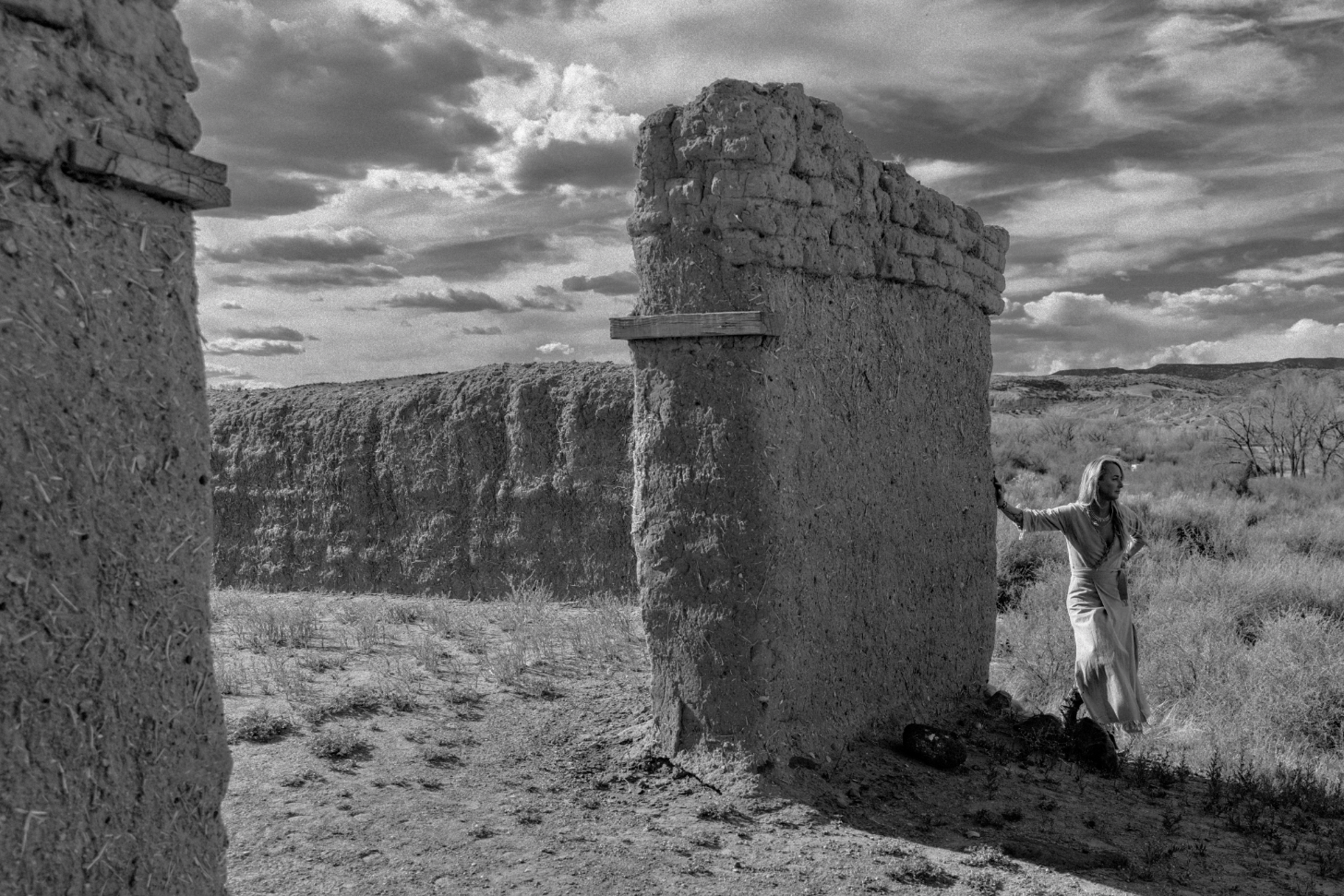
Grief Without a Funeral.
The grief hasn’t moved because it isn’t behind you.
You keep handling it like an event — a thing that happened, that you are meant to work through and come out the far side of. But you are not on the far side looking back. You are still inside it.
A crossing. The old self is being taken apart, and the new one has not been made, and you are in the stretch between them with nothing to tell you how far it runs or where it ends.
There was no funeral because nothing the world can see has died.
A funeral is for a body. The people around you know that rite — they gather, they bring food, they say the name, they go home. But what is ending in you is not a person. It is a version of you the old life fit, coming apart so that something you can’t picture yet can take its place. No one buries that. There is no casket for who you were. The world holds a ceremony for the death it can see and offers nothing at all for the one happening underneath your ordinary days.
So you cross it unmarked. No one lights a candle at the door. No one tells you which passage you are in, or that others have come through it, or what it does and doesn’t mean. You are doing in private, and alone, and without a name for it, the one thing that was never meant to be done that way.
Every tradition that took the inner life seriously knew this passage. Not one of them left a person to make it alone. They built something to hold the crossing — a rite, a span of time set apart, a threshold marked at both ends, people who had been through it and could say yes, this is what it is, and it is not what you are afraid it is. The passage was never meant to be survived by will. It was meant to be contained.
We kept the funeral. We let the rest go. And so a passage that was once accompanied is now one we make with no rite, no witness, no room — and then we wonder why it takes so long, and costs so much, and leaves people certain something is wrong with them.
You are not sick. You are at a threshold no one built a door for.
What it asks of you is not to move the grief. You already know you can’t. It asks for a container — a room made for exactly this, where the crossing can be said out loud and you are not the only one who knows you are in it. Not to end the passage. To hold you while it remakes you.
The remaking does not undo the wound. Whatever self comes out the far side carries it still. The crossing is only the work of being taken apart and built again around the wound that stays.